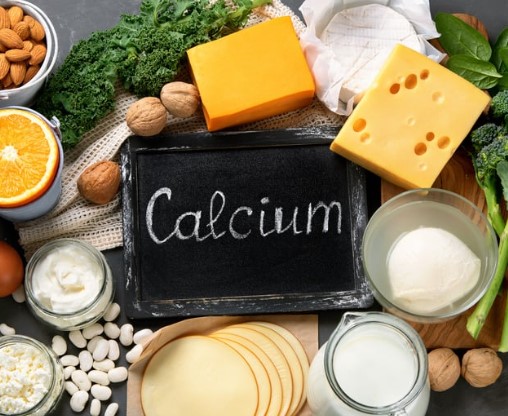



Calcium is the most abundant mineral in the human body, with 99% stored in bones and teeth, giving them structure and strength. But its importance goes far beyond the skeleton—it’s also crucial for muscle contraction, nerve transmission, blood clotting, and enzyme activation.
Your body tightly regulates blood calcium levels because even small shifts can affect heart rhythm, nerve signaling, and muscle function. If dietary intake is low, calcium is withdrawn from bones to maintain balance—gradually weakening bone density over time.
Vitamin K: The Silent Strength Behind Clotting and Bone Health
Getting enough calcium is especially critical during childhood, adolescence, pregnancy, and older age, as these are times of high bone turnover. Long-term deficiency can lead to osteopenia or osteoporosis, increasing the risk of fractures in later life.
READ MORE ABOUT VITAMINS AND MINERALS
ON OUR WEBSITE HERE
Calcium-rich foods include dairy products (milk, yogurt, cheese), leafy greens (collard greens, bok choy), tofu, almonds, sardines with bones, and fortified plant milks. However, absorption depends on the presence of vitamin D, which helps transport calcium into the bloodstream.
The recommended daily intake is about 1,000 mg for most adults, rising to 1,200 mg for postmenopausal women and those over 70. Excess calcium from supplements (especially over 2,000 mg/day) may lead to kidney stones or interfere with absorption of other minerals.
In summary, calcium is the bedrock of physical strength and cellular function. It’s not just for bones—it supports your muscles, heart, nerves, and overall vitality. A diet rich in varied calcium sources, combined with adequate vitamin D, is key to strong bones and lifelong health.
Пронајдете не на следниве мрежи: